Pagehive blog
What's new
in Pagehive.
New features, how-tos and notes from the team building Pagehive.
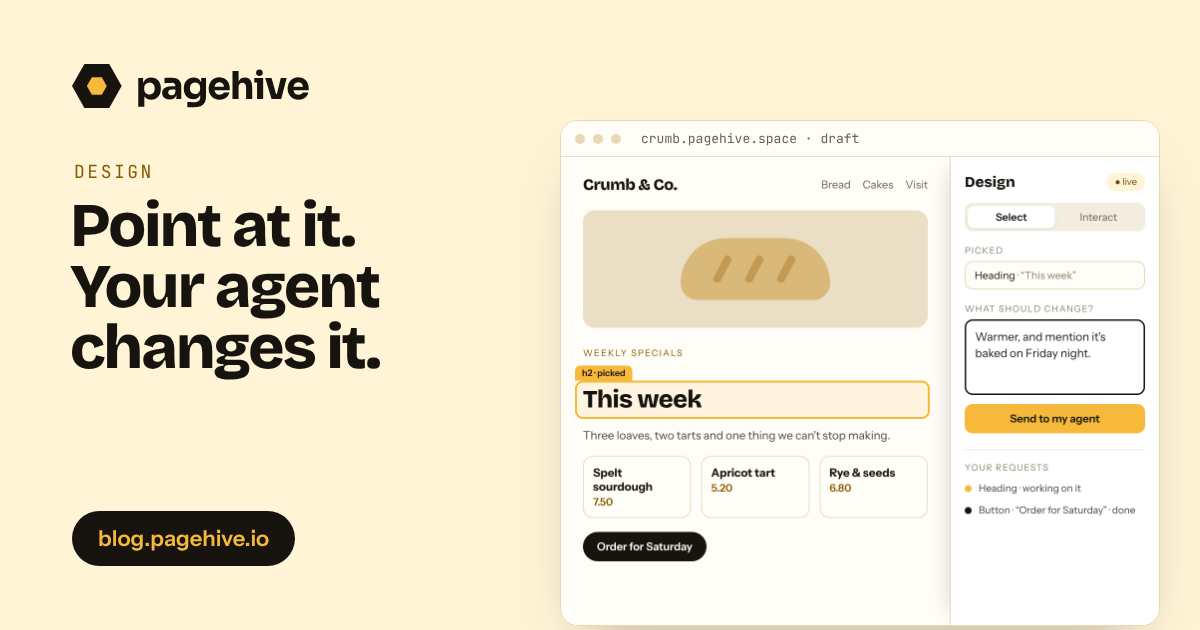
Point at it. Your agent changes it.
On Pagehive, your AI assistant (like Claude or ChatGPT) builds and changes your website when you ask it in a chat. That works well until you get to the small things. "Make the heading in the second section a bit warmer." "No, the other heading."…
Read the post →
Start free, and pay only when your site needs more
Most websites start small: a page for a side project, a site for a new business, a list your club keeps up to date. Some of them grow into something that needs its own web address, a shop or a dozen pages. You shouldn't have…
Read the post →
Build a site for a client, then hand it over
Lots of websites are built by one person and owned by another. A freelancer makes a site for a bakery. A nephew sets one up for his aunt's yoga classes. Sooner or later the site should belong to the person whose business it is.
Read the post →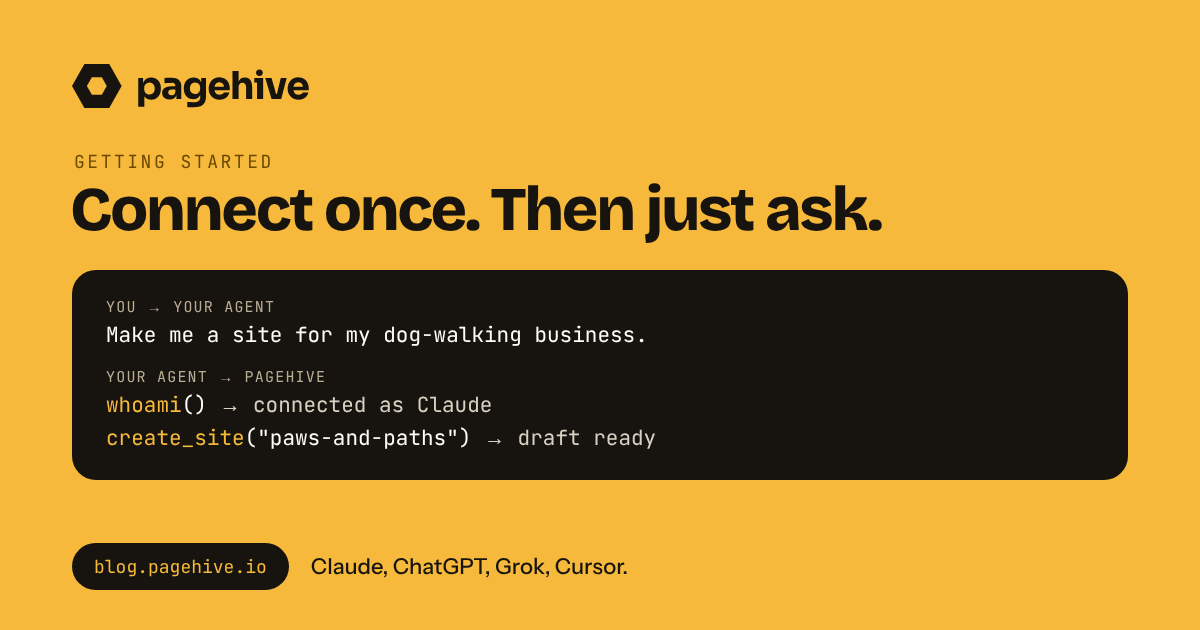
Connect your AI assistant to Pagehive in a few clicks
If you already chat with Claude or ChatGPT, you have most of what you need to run a website. On Pagehive, your AI assistant builds your site and looks after it, and you just ask in the chat. First, though, your assistant has to be…
Read the post →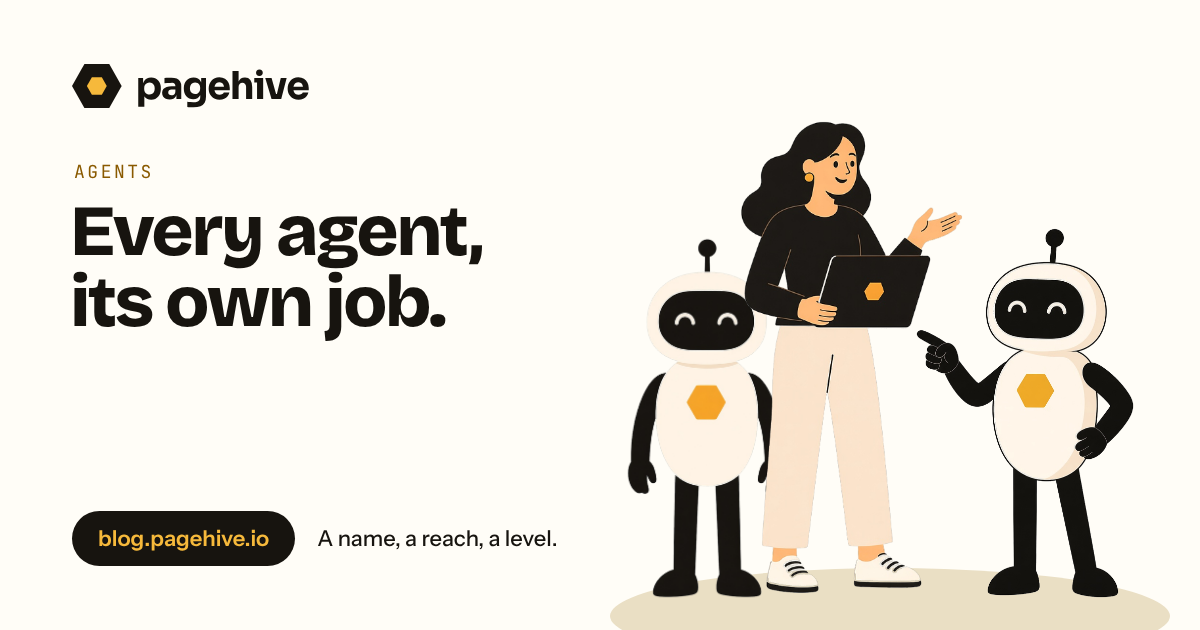
Give every AI assistant its own name, job and limits
Many people who use AI don't stop at one assistant. Claude for the big jobs, ChatGPT on the phone, a small program that runs every morning. On Pagehive they can all work on your website. We call each one an agent: an AI assistant or…
Read the post →
Keep your site private without locking people out
Some sites aren't for everyone. A price list for trade customers, the photos from a family weekend, a club's members' pages, a client's work in progress. You want the right people in with as little fuss as possible, and everyone else out.
Read the post →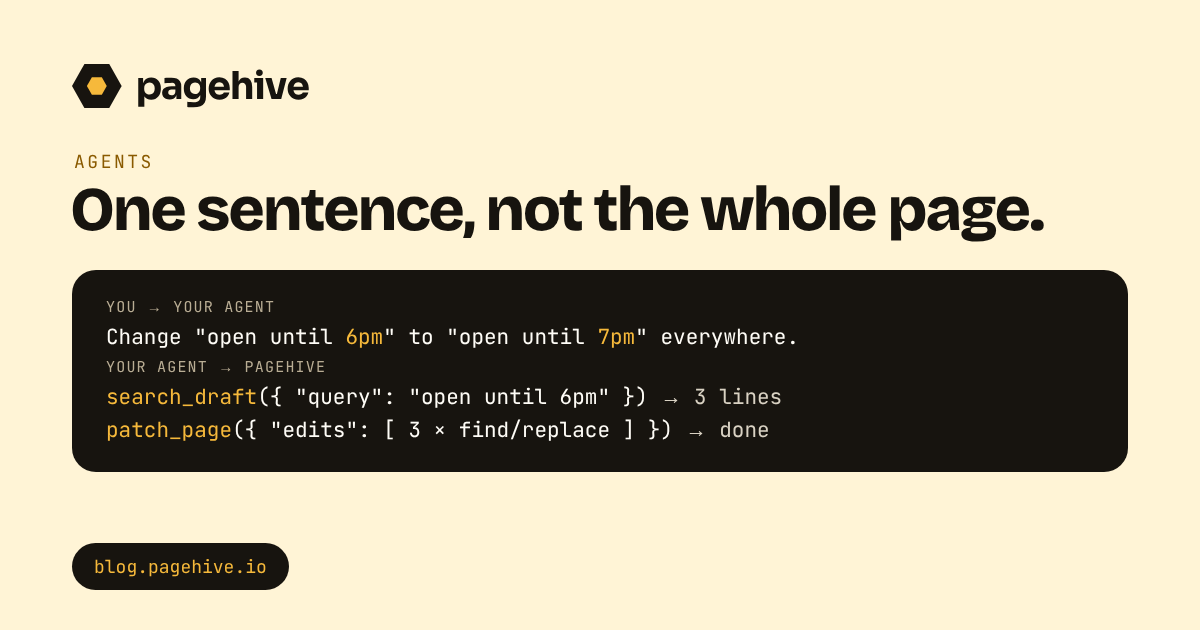
Your AI assistant gets more done when it reads less
On Pagehive, your AI assistant (like Claude or ChatGPT) builds and looks after your website for you. You tell it what you want in a chat, and it makes the change.
Read the post →
Move your site to Pagehive without breaking a single link
Moving your website to a new home is nerve-racking for one reason: all the links people already have. The address in last year's newsletter, a bookmark, a Google result. If those break, visitors land on an error page, and Google slowly forgets you.
Read the post →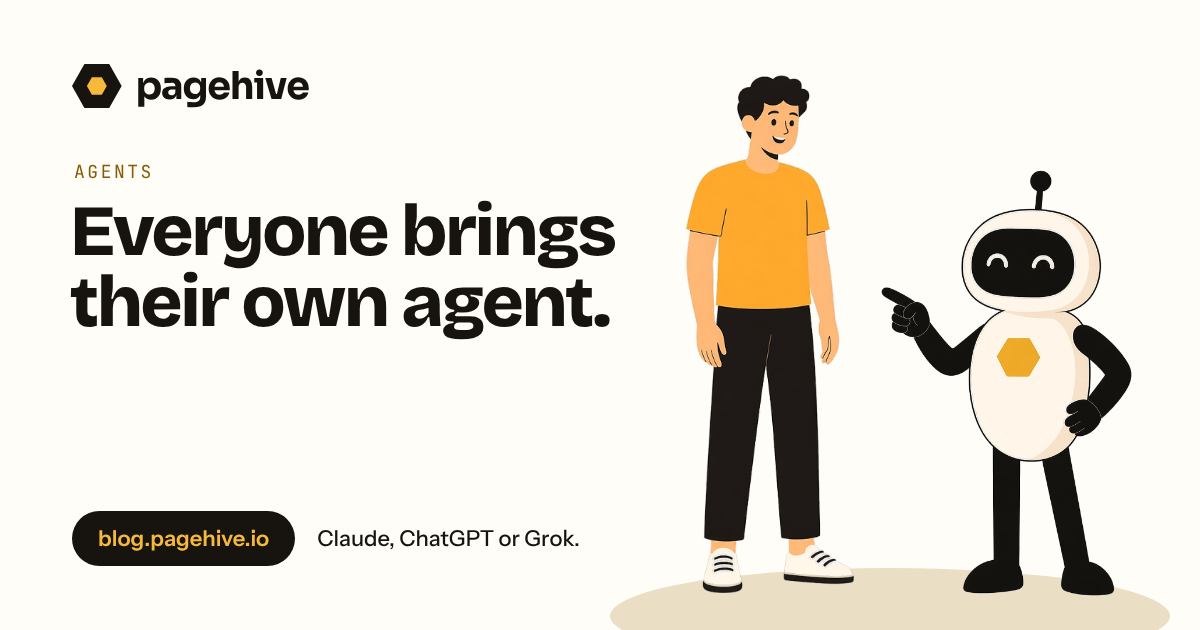
Everyone on your site can bring their own AI assistant
On Pagehive, your AI assistant (like Claude or ChatGPT) builds and looks after your website. But a site doesn't have to stay a one-person job. You can invite people to it, like a designer, a client or a colleague. They can use their own AI…
Read the post →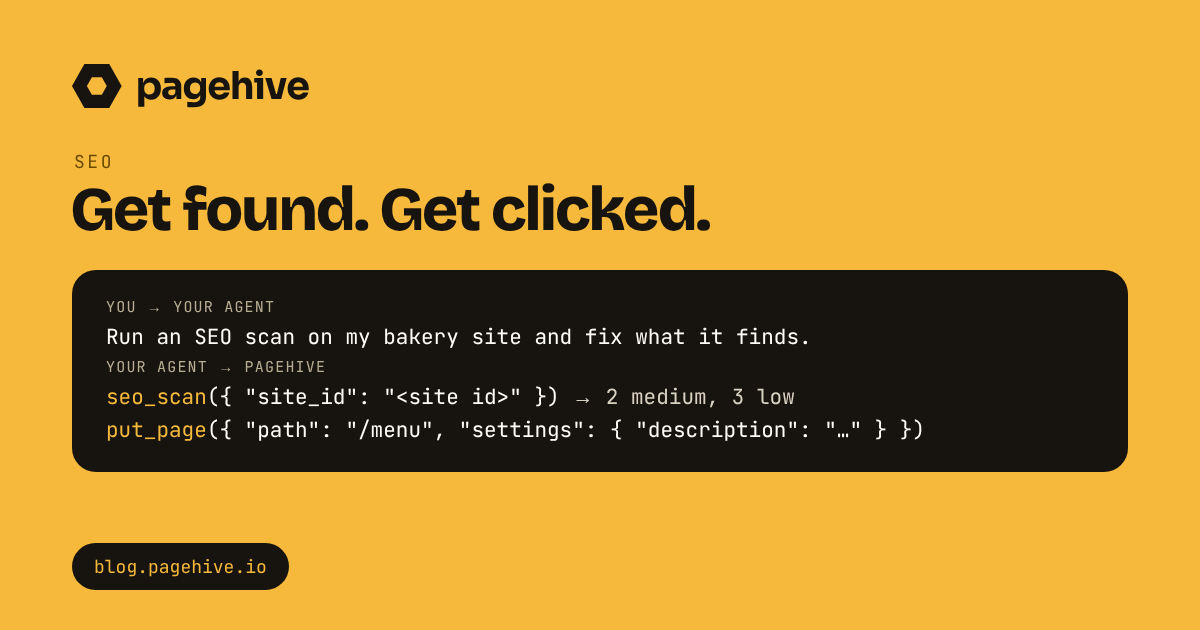
Get found, and get the click
A website only helps you if people find it. Most people find sites through Google, and SEO (search engine optimization) means making your pages easy for search engines to understand. And when someone shares your link on WhatsApp or LinkedIn, the little preview with a…
Read the post →
Know exactly who can see what on your site
On Pagehive, your AI assistant (like Claude or ChatGPT) builds your website for you. That's quick, but it raises a fair question: is anything visible that shouldn't be? A price list meant for trade customers, a client's files, a sign-up list with names in it.…
Read the post →
Bring your team onto your site
Most sites aren't meant for everyone. A client portal, a team handbook, a club schedule, a list of who's bringing what: they're for a group of people you know. On Pagehive, where your AI assistant (like Claude or ChatGPT) builds and runs your website, you…
Read the post →
Your agent builds the site. Your domain makes it yours.
On Pagehive, your AI assistant (like Claude or ChatGPT) builds and looks after your website. Every new site gets a free address like yourname.pagehive.space. That's fine for trying out an idea. But a site you send to customers should have your own address, like yourbakery.com.…
Read the post →